The Fundamentals of Calorie Counting in 2026
In the ever-evolving world of health and fitness, one concept remains the bedrock of weight management: the energy balance equation. Whether your goal is to shed a few pounds for summer or to build lean muscle mass, understanding calorie counting is essential. In March 2026, we have more technology at our fingertips than ever before, yet the basic science remains the same: calories in versus calories out (CICO).
A calorie is simply a unit of energy. When we talk about calorie counting, we are essentially managing our body's energy budget. If you consume more energy than you expend, your body stores the excess as fat. If you consume less, it draws from those stores to fuel your daily activities. This guide will walk you through the nuances of modern tracking, from reading complex digital labels to leveraging the latest AI-driven tools.
Why Precision Matters for Your Goals
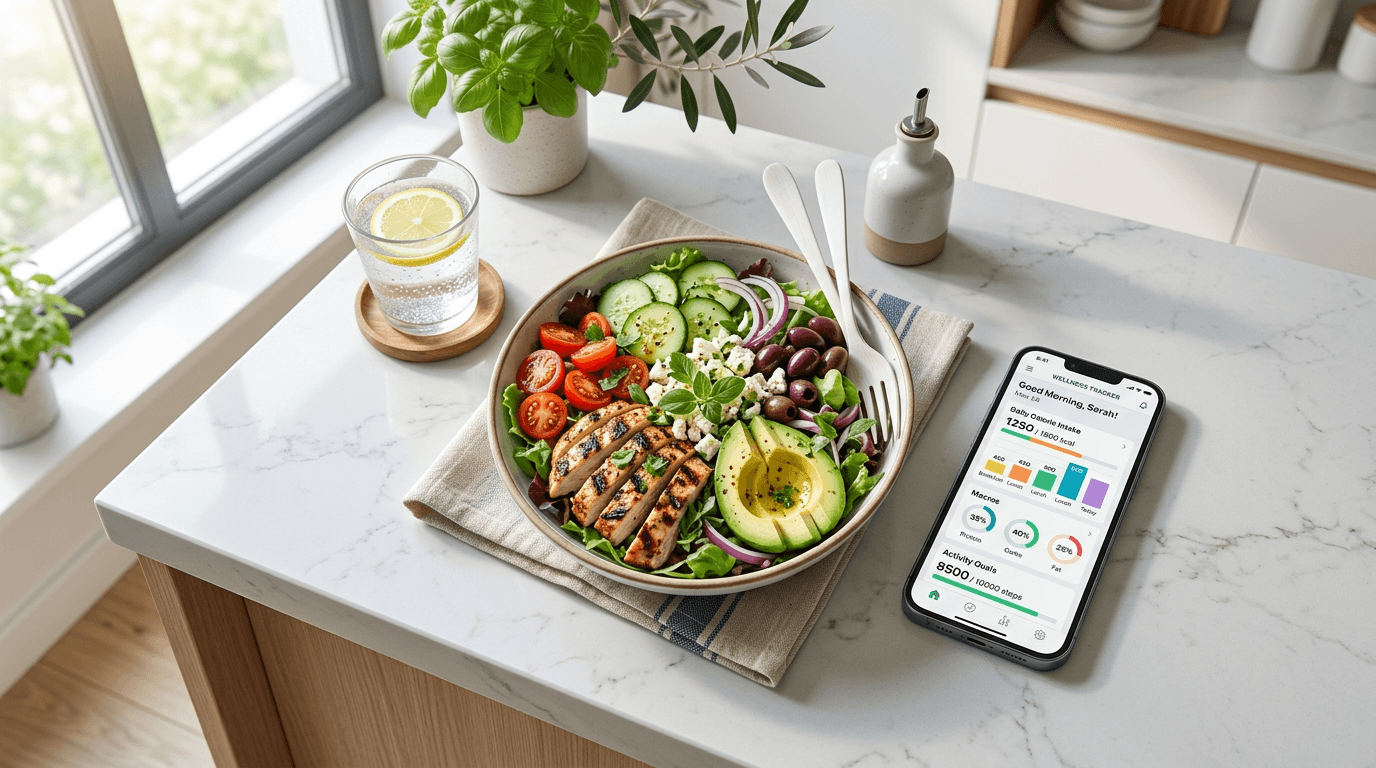
Many people attempt to lose weight by "eating healthy" without actually tracking their intake. While choosing whole foods is vital for longevity, it is surprisingly easy to overconsume healthy fats like avocados, nuts, and olive oil. These nutrient-dense foods are also calorie-dense. This is where calorie counting provides the necessary guardrails. By quantifying your intake, you remove the guesswork and replace it with data-driven results.
By using an integrated platform like FastFlow AI, you can synchronize your caloric data with other vital metrics like hydration and fasting windows. This holistic approach ensures that you aren't just hitting a number, but nourishing your body optimally. You can download the app for iOS or Android to start your journey today.
How to Calculate Your Caloric Needs
1. Basal Metabolic Rate (BMR)
Your BMR is the number of calories your body needs to perform basic life-sustaining functions, such as breathing and cell production, while at rest. Think of it as the "idling speed" of your body's engine.
2. Total Daily Energy Expenditure (TDEE)
To find your true maintenance level, you must factor in your activity level. Your TDEE includes your BMR plus physical exercise and "NEAT" (Non-Exercise Activity Thermogenesis), which covers daily movement like walking the dog or cleaning the house. Accurate calorie counting starts with knowing this TDEE number.
- Weight Loss: Aim for a deficit of 250—500 calories below your TDEE.
- Maintenance: Eat at your TDEE level.
- Muscle Gain: Aim for a slight surplus of 200—300 calories.
Mastering the Art of Label Reading
Even in 2026, nutrition labels can be deceptive. When practicing calorie counting, always look at the "serving size" first. Manufacturers often list calories for a fraction of the package. If a bag of chips contains three servings and you eat the whole bag, you must triple the listed calories. Pay close attention to "hidden" calories in sauces, dressings, and oils, which can easily add 300 calories to a seemingly healthy salad.
Effortless Tracking with the FastFlow AI Food Scanner
One of the biggest hurdles to consistent calorie counting has historically been the manual entry of food data. In 2026, that barrier has vanished. With FastFlow AI, you can utilize the advanced AI food scanner. Simply point your camera at your meal, and the app's computer vision technology identifies the ingredients and estimates the caloric content and macronutrient breakdown instantly.
This feature, combined with our 5 fasting protocols and water tracker, creates a seamless ecosystem for health. When you combine calorie counting with intermittent fasting, you create a powerful metabolic environment for fat loss. Fasting helps control the "when," while counting calories controls the "how much."
Common Pitfalls and How to Avoid Them
Even the most dedicated individuals can stumble when they start calorie counting. Here are the most frequent mistakes observed by our AI coaches:
- Ignoring Liquid Calories: That morning latte or evening glass of wine counts toward your daily total. If you're curious about how liquids affect your progress, check out our guide on hydration and weight loss.
- Eyeballing Portions: Research shows that humans are notoriously bad at estimating portion sizes. Using a kitchen scale for just two weeks can recalibrate your "internal eye" for more accurate tracking.
- The Weekend "Blowout": Consistently hitting your targets Monday through Friday only to overindulge on Saturday can completely negate your weekly deficit.
The Importance of Hydration
Often, what we perceive as hunger is actually mild dehydration. In the FastFlow AI app, we emphasize tracking your water intake alongside your calories. Staying hydrated keeps your metabolism humming and can make the process of calorie counting feel much easier by suppressing unnecessary hunger pangs.
Is Calorie Counting Right for Everyone?
While calorie counting is a highly effective tool for many, it's important to maintain a healthy relationship with the numbers. It should be used as a source of empowerment and education, not as a source of stress. If you find yourself becoming overly obsessed with the data, it may be helpful to focus on qualitative goals or use the FastFlow AI "fasting zones" to guide your progress without strict numerical tracking for a few days.
Conclusion: Your Path to Success in 2026
Success in weight loss isn't about perfection; it's about consistency. By adopting calorie counting as a lifestyle tool rather than a temporary fix, you gain ultimate control over your physique and energy levels. With the support of FastFlow AI, its intuitive food scanner, and its supportive AI coach, you have everything you need to succeed. Ready to transform? Download the app on iOS or Android and start your first fast today.