In the world of health and fitness, few topics spark as much debate as the relationship between meal frequency and metabolic health. You've likely heard the old adage that you must "eat six small meals a day to keep the fire burning." This lead many to believe that skipping even one meal would cause their body to enter the dreaded "starvation mode," effectively grinding their fasting metabolism to a halt.
As we move into March 2026, the scientific consensus has evolved significantly. We now understand that the human body is far more adaptable than previously thought. Rather than slowing down, short-term fasting can actually provide a metabolic spark, optimizing how our cells utilize energy. If you've been hesitant to try intermittent fasting because you're worried about your metabolic rate, this deep dive into the science will set the record straight.
The Anatomy of Your Metabolism
Before we can understand how fasting metabolism works, we need to define what metabolism actually is. It's not just a single "speed" at which you burn calories; it is a complex series of chemical processes that convert food and stored energy into the fuel your body needs to survive. Your Total Daily Energy Expenditure (TDEE) is comprised of several parts:
- Basal Metabolic Rate (BMR): The energy required for basic functions like breathing and heartbeat while at rest.
- Thermic Effect of Food (TEF): The calories burned during digestion.
- Non-Exercise Activity Thermogenesis (NEAT): Energy used for daily movement like walking or fidgeting.
- Exercise Activity: Calories burned during intentional workouts.
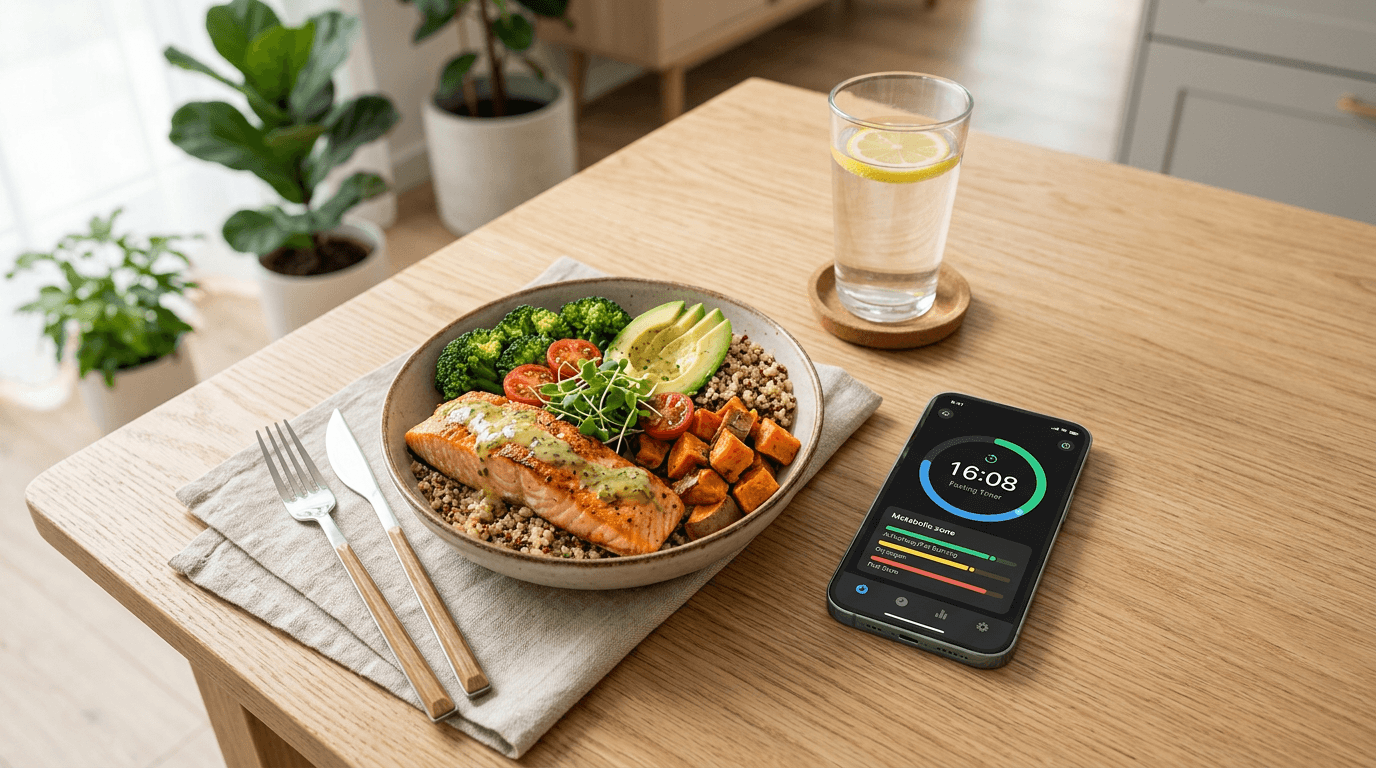
The common misconception is that by removing the TEF (by not eating), your overall metabolism crashes. However, the body compensates for the absence of food by shifting its hormonal environment to access stored energy (body fat) more efficiently. To track these shifts and ensure you are staying in the optimal fat-burning zones, using a tool like the FastFlow AI app can be a game-changer for monitoring your progress.
Debunking the "Starvation Mode" Myth
The term "starvation mode" is often misused. In clinical terms, this is known as adaptive thermogenesis. It is a real biological process, but it doesn't happen because you skipped breakfast or practiced a 16:8 fasting protocol. Adaptive thermogenesis occurs during prolonged, chronic caloric restriction where the body is consistently underfed for weeks or months at a time.
When you practice intermittent fasting, you aren't necessarily starving your body of total calories; you are simply changing the timing of when those calories are consumed. Research has shown that short-term fasts (under 48 hours) do not trigger this metabolic slowdown. In fact, some studies indicate that fasting metabolism may increase by 3.6% to 14% during the first few days of a fast.
The Role of Norepinephrine
Why does metabolism sometimes speed up during a fast? The answer lies in the nervous system. When you enter a fasted state, your levels of norepinephrine (noradrenaline) increase. This hormone signals your fat cells to break down body fat into free fatty acids that can be burned for energy. This increase in norepinephrine also stimulates your metabolic rate, providing you with the energy needed to find food—an evolutionary survival mechanism that keeps us sharp and active even when food is scarce.
How Fasting Preserves Lean Muscle
Another common fear is that a fasting metabolism will result in the body "eating its own muscle." While it's true that the body can convert protein into glucose through gluconeogenesis, intermittent fasting is remarkably muscle-sparing when compared to traditional chronic calorie counting.
During a fast, the body increases the production of Human Growth Hormone (HGH). HGH is a powerful hormone that promotes fat loss while preserving lean muscle mass. By spiking HGH, the body sends a clear signal: "Burn the fat, keep the muscle." This is why many athletes use the intermittent fasting for muscle gain approach to lean out without losing their hard-earned strength.
FastFlow AI: Your Metabolic Partner
Navigating the nuances of fasting can be difficult without the right data. FastFlow AI is an intermittent fasting, calorie tracking, hydration, and weight loss app designed to take the guesswork out of the process. With its AI coach and fasting zone tracker, you can see exactly when your body transitions from sugar-burning to fat-burning mode. You can download it for iOS or Android to start optimizing your metabolic health today.
Insulin Sensitivity and Metabolic Flexibility
One of the greatest benefits of a healthy fasting metabolism is improved insulin sensitivity. Every time you eat, your insulin levels rise to help transport glucose into your cells. If you eat constantly throughout the day, your insulin levels stay chronically high, which can eventually lead to insulin resistance—a precursor to Type 2 diabetes and a major metabolic roadblock.
By incorporating fasting periods, you allow your insulin levels to drop significantly. This teaches your body to become "metabolically flexible," meaning it can easily switch between burning glucose (from carbohydrates) and burning ketones (from stored fat). Metabolic flexibility is the hallmark of a high-functioning metabolism and is essential for long-term weight maintenance.
Adaptive Thermogenesis: When Does It Actually Happen?
To be fair to the skeptics, metabolism can slow down if fasting is done incorrectly. If you pair intermittent fasting with an extreme, long-term caloric deficit (eating far below your BMR every single day), your body will eventually respond by lowering its energy output to match the input. This is why "refeeding" windows are so important.
When you use one of the 5 fasting protocols in the FastFlow AI app, such as the 16:8 or 18:6 method, you ensure that you are still providing your body with adequate nutrition during your eating window. This prevents the brain from sensing a "famine" and triggering a permanent metabolic slowdown. For more tips on setting up your window, check out our guide on intermittent fasting for beginners.
Hydration: The Secret Driver of Fasting Metabolism
Many people overlook the role of water in metabolic processes. Chemical reactions in the body, including the breakdown of fat (lipolysis), require water molecules. If you are dehydrated, your fasting metabolism will inevitably sluggish. This is why the water tracker feature in FastFlow AI is so critical. Staying hydrated not only keeps you full during your fasting window but also ensures that your cellular machinery is running at peak efficiency.
Practical Steps to Protect Your Metabolism While Fasting
If you want to reap the benefits of fasting without any of the downsides, follow these science-backed strategies:
- Don't Under-Eat During Your Window: Ensure you are eating enough calories to support your BMR. Use a food scanner to get accurate data on your intake.
- Prioritize Protein: Aim for high protein intake to support muscle preservation and increase the thermic effect of your meals.
- Incorporate Strength Training: Lifting weights sends a signal to your body that muscle is necessary, preventing it from being broken down for energy.
- Use Fasting Zones: Monitor how long you stay in the "Fat Burning" and "Ketosis" zones to ensure you aren't over-stressing your system.
- Sleep: Poor sleep is the fastest way to ruin a healthy metabolism, as it spikes cortisol and disrupts hunger hormones like ghrelin and leptin.
Conclusion
The science is clear: fasting does not inherently slow your metabolism. In fact, when done correctly, it can be one of the most effective ways to enhance your metabolic health, improve insulin sensitivity, and protect lean muscle mass. By moving away from the "starvation mode" myths of the past and embracing a data-driven approach, you can unlock a leaner, more energetic version of yourself.
Ready to take control of your fasting metabolism? Let FastFlow AI be your guide. With a comprehensive suite of tools including a water tracker, weight tracker, and AI-powered coaching, you'll have everything you need to succeed in your weight loss journey. Download the app today on iOS or Android and start flowing toward your goals.